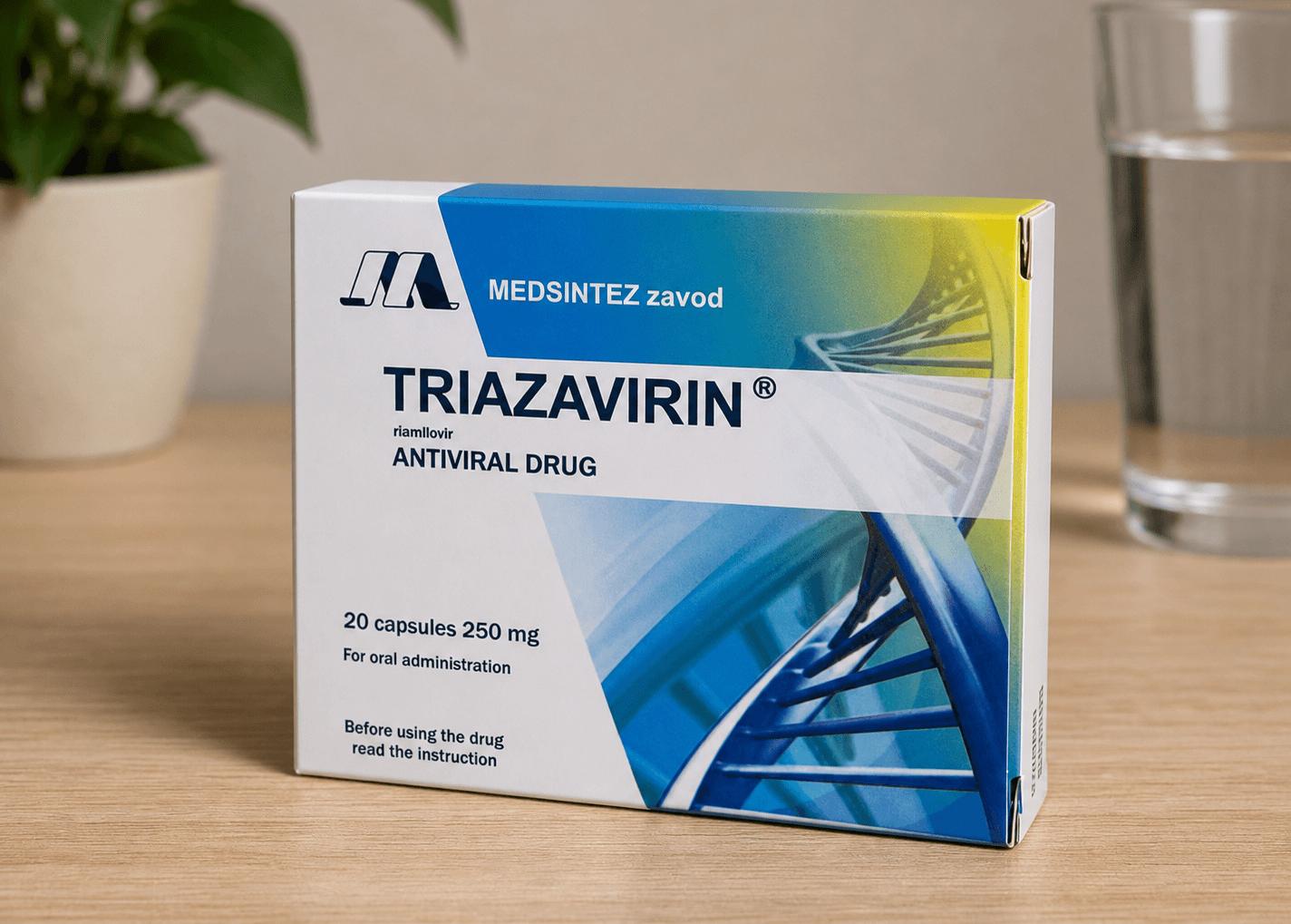
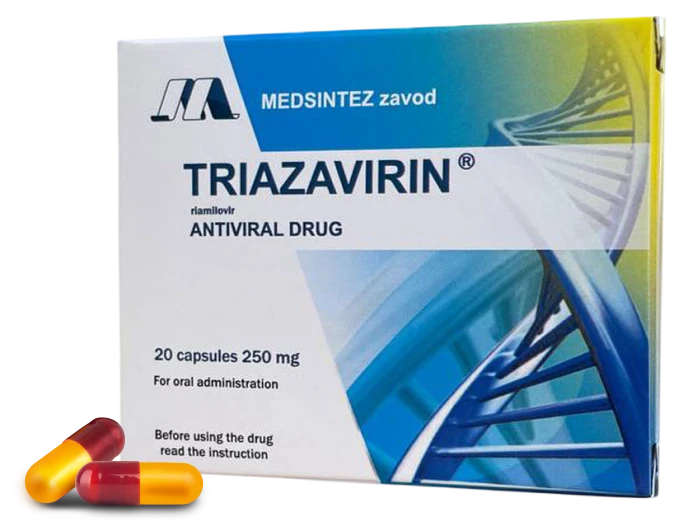




One of the key objectives of the present-day medicine is the development of new medications that are effective in combating viral infections and safe for patients. TRIAZAVIRIN® (INN Riamilovir) is a comprehensive direct-acting antiviral agent (DAA). Its active substance acts directly on the virus, limiting the spread of its nucleic acids (RNA) thus preventing the virus from reproducing in the body.
This mechanism of action provides several important properties: safety, effectiveness, reduced recovery period, and good tolerability — i.e., minimal side effects while taking the medication. Further, TRIAZAVIRIN® reduces the risk of complications.
TRIAZAVIRIN® was developed by leading institutes of the Russian Academy of Sciences, with the involvement of clinical sites such as the A.A. Smorodintsev Research Institute of Influenza of the Ministry of Health of Russia, the Scientific Research and Testing Institute of Military Medicine of the Ministry of Defense of Russia, etc. [1].
The efficacy and safety of TRIAZAVIRIN® have been established through numerous studies and confirmed by extensive clinical (practical) experience with the drug. The studies were conducted at leading research and medical institutions. The safety of the drug was assessed in comparison with placebo. These results served as the grounds for including TRIAZAVIRIN® in the Clinical Guidelines of the Russian Ministry of Health for the treatment of acute respiratory viral infections, influenza, and COVID-19 [2–3].
The studies of TRIAZAVIRIN® at a therapeutic dose of 250 mg three times a day for 5 days demonstrate that the drug helps improve the condition of patients with influenza and acute respiratory viral infections, regardless of when they seek medical help. Therapy with TRIAZAVIRIN® was carried out both for patients who sought treatment at the initial stage of the disease (within the first 72 hours) and for patients who required hospitalization as late as the second week of illness. In both cases, there was a reduction in the severity of symptoms that aggravate the course of the disease, such as weakness, headache, myalgia, chills, runny nose, sore throat, fever, and others. This indicates the prevention of disease progression and the effective and safe therapeutic benefit of TRIAZAVIRIN® [4–5]. The use of TRIAZAVIRIN® ensured rapid relief of fever and catarrhal symptoms, even in patients with complicating associated chronic diseases — i.e., with comorbidities [5].
It is also worth noting that after administration, TRIAZAVIRIN® is rapidly absorbed in the gastrointestinal tract. Peak plasma concentration is usually reached within 1–1.5 hours, with 10% to 45% of the drug excreted from the body unchanged. This indicates good bioavailability and absorption of the drug. The study confirmed the safety and good tolerability of TRIAZAVIRIN® [6].
Antiviral therapy with TRIAZAVIRIN® helps reduce the duration of the main symptoms of the disease, as well as the frequency of complications and the amount of symptomatic therapy required. This is confirmed by the results of clinical studies of TRIAZAVIRIN®, where placebo was used as a control.
TRIAZAVIRIN® has demonstrated high antiviral potency against a number of viruses, including influenza virus, respiratory syncytial virus, measles virus, parainfluenza virus, adenovirus, and many others. Using a model of lethal influenza infection in mice, it was found that TRIAZAVIRIN® provides high protection to infected mice and significantly increases their lifespan [1]. TRIAZAVIRIN® is effective in both prophylactic and therapeutic use [7–9].
Preclinical trials have demonstrated the safety of TRIAZAVIRIN®. It was established that TRIAZAVIRIN®, even at a dose 20 times higher than the daily human dose, did not cause any changes in the structure of internal organs or in the general condition and behavior of the animals, which allowed TRIAZAVIRIN® to be classified as a low-toxicity drug. During the study of specific types of toxicity, it was shown that TRIAZAVIRIN® did not have an allergenic or immunotoxic effect. A study of the possible mutagenicity and risk of carcinogenic effects of TRIAZAVIRIN® demonstrated the safety of the drug with respect to the development of long-term adverse effects. It should also be noted that TRIAZAVIRIN® does not have an irritating effect on the mucous membranes of the gastrointestinal tract [1]. Importantly, safety studies of the direct-acting antiviral drug TRIAZAVIRIN® to assess reproductive toxicity found that it had no adverse effect on reproductive function, fertility, pregnancy, number of offspring, and development of juvenile animals. The pups from females in the experimental groups did not differ in physiological parameters from those in the control group. This confirms the safety of Riamilovir (TRIAZAVIRIN®) for the reproductive system and development [10].
The results of clinical trials aimed at studying the safety and pharmacokinetics of TRIAZAVIRIN® showed that the drug was well tolerated by study participants at all doses studied. Moreover, it was found that the drug did not impair functional abilities and did not have a negative impact on the body’s systems. During the analysis of the drug’s effect on the duration of the main symptoms of the disease, a reduction in the duration of the febrile episode as well as the acute period of the disease was noted.
For example, when taking the drug 2 times a day, the duration of the febrile syndrome was 1.83 and 1.85 days, and when taking the drug 3 times a day — 1.6 and 1.51 days accordingly, depending on the influenza strain. Further, after 24 hours, normal body temperature (< 37℃) was achieved in 45.9% of patients taking the drug 2 times a day, in 51.35% taking it 3 times a day, and in only 13.5% of those taking placebo, which is statistically confirmed. Two days after the start of TRIAZAVIRIN® treatment, these figures were 54.05%, 83.78%, and 21.62%, respectively. A similar statistically confirmed trend was observed when analyzing the symptoms of headache, myalgia, and eye pain. All study participants tolerated TRIAZAVIRIN® well, and no adverse side effects or complications were observed [1].
In addition, a comparison was made of the efficacy and safety of two drugs — TRIAZAVIRIN® and Tamiflu, which is considered the “gold standard” for influenza treatment in the medical community. The study shows that treatment with TRIAZAVIRIN® in patients with influenza is effective and safe. Patients tolerate this treatment well, and no side effects occur. In addition, those taking TRIAZAVIRIN® had a lower rate of influenza virus detection on day 5 of treatment compared to patients in the Tamiflu® group [11].
In the context of postmarketing practice, the drugs Riamilovir (TRIAZAVIRIN®) and Umifenovir were compared. Manifestations of the disease persisted on day 3 in 12% of patients using TRIAZAVIRIN®, while in patients treated with Umifenovir, they persisted on day 4 in 23%. An assessment of the effectiveness of antiviral therapy for influenza with Riamilovir (TRIAZAVIRIN®) and Umifenovir showed that both drugs relieve the main symptoms, while the severity of the syndromes decreased more rapidly with Riamilovir [12].
Thus, it can be concluded that the use of direct-acting antiviral therapy for influenza with TRIAZAVIRIN® reduces the incidence of complications in patients and helps stabilize the pathological process in the body, in contrast to patients who have not received such therapy.
It is worth noting that during the coronavirus pandemic, a direct-acting antiviral drug designed to treat and prevent COVID-19 was not immediately identified. This was a global problem and a challenge for the present-day medicine in the context of a pandemic. The first data on the practical use of Riamilovir against COVID-19 appeared in 2020. The study by A.U. Sabitov showed that improvement in the condition of patients with moderate COVID-19 associated with TRIAZAVIRIN® was observed on days 6–7 [13].
After numerous trials and practical use in COVID-19 outbreaks, TRIAZAVIRIN® has established itself as the only direct-acting antiviral drug applicable for the prevention of COVID-19 [1]. The drug is clinically effective and safe, in particular, in terms of tolerability [14–16]. This is demonstrated by comparative placebo-controlled studies. The distinctive feature and importance of the study lies in the fact that it was:
Blinded: Neither the doctor nor the study participants knew who was receiving the new treatment and who was receiving a placebo (dummy drug). This helps avoid bias in the assessment of results.
Randomized: Study participants were randomly assigned to the groups. This makes the sample more representative and helps avoid the influence of external factors.
Multicenter: The study was conducted in several medical centers or hospitals simultaneously. This increases the number of participants and makes the results more reliable.
Such studies carry great weight in the scientific community due to their maximum impartiality and broad study base.
The study involved 750 adults who were in constant contact with COVID-19 patients in a shared living environment. The study found that the risk of developing the disease in the group that used TRIAZAVIRIN® to prevent COVID-19 was 89% lower compared to the placebo group. Of 375 patients in TRIAZAVIRIN® group, 3 people had a confirmed diagnosis of COVID-19; however, a reduced rate of disease progression was noted (day 3 of disease onset in the Placebo group versus day 9 in the TRIAZAVIRIN® group). In addition, a lower number of symptoms was noted in the TRIAZAVIRIN® group compared to the Placebo group — 2 symptoms up to day 4 and 8 symptoms up to day 7, respectively [17].
The efficacy and safety of TRIAZAVIRIN® in the treatment of COVID-19 were also established through a randomized double-blind study. According to its results, on day 3, the proportion of patients with a negative COVID-19 test result in the TRIAZAVIRIN® group increased by 53.3%, and on day 7 of the trial, the virus was not detected in any patient in the TRIAZAVIRIN® group. Thus, TRIAZAVIRIN® is superior to the control group in terms of the time to onset of a sustained reduction in COVID-19 symptoms (fever, sore throat, cough, weakness, etc.). The TRIAZAVIRIN® group is superior to the control group in terms of the rate of SARS-CoV-2 re-detection in patients over time [18].
The analysis of the efficacy of Riamilovir compared with the combination of Umifenovir and Ribavirin was carried out over 5 days. The results showed that in the TRIAZAVIRIN® group, there was a statistically significant reduction in the overall duration of acute disease symptoms (fever, cough, general intoxication, loss of smell, viral circulation in the blood, and general clinical and blood chemistry parameters). These results in patients with moderate COVID-19 indicate the superiority of Riamilovir (TRIAZAVIRIN®). It is worth noting that the Umifenovir + Ribavirin comparison group involved a combination of two direct-acting antiviral drugs. Moreover, the patients in the comparison group were younger.
It is also crucial to study the drug’s effect on liver function, as coronavirus infection affects this important organ. This issue can be investigated by analyzing liver enzymes (transaminases), which are responsible for nitrogen metabolism reactions in the body.
A study of the changes over time during the therapy period showed that the potency of sensitive indicators in the Umifenovir + Ribavirin group on day 7 of therapy was exceeded by 6 and 3 times, respectively, compared to the beginning of therapy. This indicates a risk of liver pre-pathology. At the same time, in the TRIAZAVIRIN® group, these indicators were exceeded by less than 2 times or did not change at all, respectively, compared to the beginning of therapy. This indicates that TRIAZAVIRIN® has virtually no effect on liver function and liver enzyme levels. This indicates the absence of toxic effects on the human liver — that is, the high safety profile of the drug [19–20].
As an emergency drug prophylaxis in coronavirus infection outbreaks, patients took TRIAZAVIRIN® once a day for 20 days. This study demonstrated the effectiveness of prophylactic administration of TRIAZAVIRIN®, which amounted to 97.35%. TRIAZAVIRIN® did not demonstrate significant changes in important parameters throughout the observation period, which were assessed before and after its use. Thus, the studies conducted have shown that TRIAZAVIRIN® has high prophylactic effectiveness [21].
As part of the practical use of TRIAZAVIRIN® in the treatment of hospitalized patients with COVID-19, a comparison was made of the clinical efficacy and safety of two antiviral agents that inhibit viral replication: Favipiravir and Riamilovir. The results indicate that treatment with Riamilovir (TRIAZAVIRIN®) resulted in a statistically significant reduction in the duration of symptoms and a faster rate of decline in inflammatory markers, regardless of disease severity. Riamilovir (TRIAZAVIRIN®) has demonstrated higher efficacy and safety in the treatment of COVID-19 compared to Favipiravir [22].
In addition, following trials to assess the efficacy, safety, and tolerability of TRIAZAVIRIN® for COVID-19, the drug was recommended as a means of etiotropic therapy and prevention of coronavirus infection in the Clinical Guidelines of the Russian Ministry of Health [23–24].
Thus, numerous studies have identified and confirmed the high level of safety, good tolerability, and efficacy of TRIAZAVIRIN®. Due to its direct mechanism of action, the drug provides targeted therapy, minimizes side effects associated with Riamilovir (TRIAZAVIRIN®), and promotes a quick recovery.
This is an important criterion when taking medications, as it is important to know that the treatment methods we rely on are safe.
[1] Following the audit of DSM Group JSC as of June 2026 for ATC J05A drugs.
1. Deeva E.G., Rusinov V.L., Charushin V.N. et al. Antiviral drug TRIAZAVIRIN®: from screening to clinical testing. // Development and Registration of Drugs. – 2014. – No. 7 (7): 144–151.
2. Clinical Guidelines of the Ministry of Health of Russia “Influenza in Adults” and “ARVI (Acute Respiratory Viral Infections) in Adults,” 2025.
https://cr.minzdrav.gov.ru/preview-cr/749_2
https://cr.minzdrav.gov.ru/preview-cr/724_2
3. Order of the Ministry of Health of the Sverdlovsk Region No. 1545-p dated September 6, 2018 – 14 p.
4. Verevshchikov V.K., Shemyakina E.K., Sabitov A.U., Khamanova Yu.B. Possibilities of etiotropic therapy for influenza and acute respiratory viral infections, taking into account the duration of hospitalization and the risk of developing secondary complications. // Antibiotics and Chemotherapy. 2019. – No. 64 (3–4): 10–14. doi:10.24411/0235-2990-2019-100012
5. Verevshchikov V.K., Shemyakina E.K., Sabitov A.U., Batskalevich N.A. Modern etiotropic therapy of influenza and acute respiratory viral infections in adult patients with complicated premorbid pathology. // Antibiotics and Chemotherapy. – 2018. – No. 63 (7–8): 47–50.
6. Deeva E.G., Kiselev O.I., Melnikova T.I., Shaldzhan A.A., Nekrasov P.A., Kiselev A.S., Zagorodnikova K.A., Charushin V.N., Rusinov V.L., Ulomsky E.N., Chupakhin O.N. New antiviral drug TRIAZAVIRIN®. Results of Phase 1 clinical trial. // Epidemiology and Infectious Diseases. – 2013. – No. 5: 20–26.
7. Loginova S.Ya., Borisevich S.V., Rusinov V.L., Ulomsky U.N., Charushin V.N., Chupakhin O.N., Sorokin P.V. Study of the prophylactic potency of TRIAZAVIRIN® against an experimental form of tick-borne encephalitis in white mice // Antibiotics and Chemotherapy. 2015. – No. 60 (5–6): 8.
8. Loginova S.Ya., Borisevich S.V., Maksimov V.A., Bondarev V.P., Kotovskaya S.K., Rusinov V.L., Charushin V.N., Chupakhin O.N. Therapeutic potency of the new domestic chemotherapy drug TRIAZAVIRIN® against the causative agent of influenza A (H5N1) // Antibiotics and Chemotherapy. 2011. No. 56 (1–2): 10–11.
9. Chepur S.V., Smirnova A.V., Kirienko A.N., Myasnikova I.A., Kanevsky B.A., Sorokin P.V. Study of the potency of the drug riamilovir against SARS-CoV-2 infection in Syrian hamsters. // Antibiotics and Chemotherapy. – 2021. – No. 66 (7–8): 13–19. doi: 10.24411/0235-2990-2021-66-7-8-13-19.
10. Sabitov A.U., Larionov L.P., Dobrinskaya M.N., Ledyankina O.V., Osipenko A.V., Valamina I.E., Filippova E.V., Fatikhov I.M. Results of preclinical studies assessing the effect of the drug Riamilovir on reproductive function and postnatal development of offspring in laboratory animals. // Antibiotics and Chemotherapy. – 2023. – No. 68 (5–6): 24–32. doi:10.37489/0235-2990-2023-68-5-6-24-32
11. Sologub T.V., Tokin I.I., Midikari A.S., Tsvetkov V.V. Comparative efficacy and safety of antiviral drugs in the treatment of patients with influenza. // Infectious Diseases. – 2017. – No. 15 (3): 25–32. doi: 10.20953/1729-9225-2017-3-25-32
12. Emelyanova A.N., Tikhonova E.P., Kuzmina T.Yu., Emelyanov A.S., Chuprova G.A., Epifantseva N.V., Klimovich K.I., Radyukin N.O., Radyukina E.O., Yurchuk S.V., Vitkovsky Yu.A. Evaluation of the efficacy of antiviral therapy for influenza A(H1N1) in the 2017–2018 and 2018–2019 epidemic seasons. // Experimental and Clinical Pharmacology. – 2020. – No. 83 (3): 23–27. doi:10.30906/0869-2092-2020-83-3-23-27
13. Sabitov A.U., Belousov V.V., Edin A.S., Oleinichenko E.V., Gladunova E.P., Tikhonova E.P., Kuzmina T.Yu., Kalinina Yu.S., Sorokin P.V. Practical experience with Riamilovir in the treatment of patients with moderate COVID-19. // Antibiotics and Chemotherapy. – 2020. – No. 65 (7–8): 27–30. doi:10.37489/0235-2990-2020-65-7-8-27-30
14. Trishkin D.V., Kuandykov M.G., Azarov I.I., Akimkin V.G., Kuzin A.A., Yumanov A.P., Kolesnikov V.V., Smirnov A.V., Pshenichnaya N.Yu., Degtyarev A.A., Tatarenko A.Yu., Filippov A.V., Davidov M.M., Spirichev A.N., Semenov A.V., Dmitrakovich D.V. Experience in organizing the work of medical and nursing teams of the combined detachment of the Armed Forces of the Russian Federation in the Italian Republic under the leadership of epidemiologists. // Epidemiology and Infectious Diseases. Current Issues. – 2021. – No. 11 (4): 96–102. doi: 10.18565/epidem.2021.11.4.96–102
15. Gorenchuk A.N., Zhogolev S.D., Kuzin A.A., Kulikov P.V., Zhogolev K.D., Gumilevsky B.Yu., Sboychakov V.B., Yumba E.K., Svistunov S.A. A method for emergency prevention of COVID-19 and other acute respiratory diseases in military units // From the theory of self-regulation to global self-isolation: modern challenges to epidemiological science and practice. – 2022. – P. 73–76.
16. Gorenchuk A.N., Zhogolev S.D., Kuzin A.A., Kulikov P.V., Zhogolev K.D., Kolesnikov V.V., Shipitsyn K.S., Gumilevsky B.Yu., Sboychakov V.B., Yumba E.K. Evaluation of the efficacy of TRIAZAVIRIN® for the prevention of novel coronavirus infection COVID-19 and other acute respiratory diseases in military units // IX Luga Scientific Readings. Modern Scientific Knowledge: Theory and Practice. – 2021. – P. 96–99.
17. Sabitov A.U., Lioznov D.A., Zhdanov K.V., Tikhonova E.P., Esaulenko E.V., Sorokin P.V. Results of a randomized, double-blind, multicenter clinical trial of the efficacy and safety of riamilovir for the prevention of COVID-19 // Therapeutic Archive. – 2024. – No. 96 (3): 280–285. doi: 10.26442/00403660.2024.03.202652
18. Sabitov A.U., Lioznov D.A., Zhdanov K.V., Tikhonova E.P., Esaulenko E.V., Kovtun O.P., Kuznetsov P.L., Sorokin P.V. Results of a randomized, double-blind, multicenter clinical trial of the efficacy and safety of Riamilovir in the treatment of COVID-19 // Therapeutic Archive. – 2024. – No. 96 (5): 517–522. doi: 10.26442/00403660.2024.05.202770
19. Kasyanenko K.V., Maltsev O.V., Kozlov K.V., Lapikov I.I., Lvov N.I., Sukachev V.S., Zhdanov K.V., Sorokin P.V., Ratnikova A.K. Clinical efficacy and safety of Riamilovir in the treatment of patients with SARS-CoV-2 infection. // Antibiotics and Chemotherapy. – 2020. – No. 65 (11–12): 16–21. doi:10.37489/0235-2990-2020-65-11-12-16-21
20. Maltsev O.V., Kasyanenko K.V., Kozlov K.V., Zhdanov K.V., Lapikov I.I. Prospects for using the nucleoside analog riamilovir in the treatment of patients with SARS-CoV-2 infection. // Therapeutic Archive. – 2022. – No. 94 (10): 1171–1176. doi:10.26442/00403660.2022.10.201920
21. Sabitov A.U., Sorokin P.V., Dashutina S.Yu. Experience with the prophylactic use of Riamilovir in coronavirus infection foci (COVID-19). // Therapeutic Archive. – 2021. – No. 93 (4): 435–439. doi:10.26442/00403660.2021.04.200751
22. Sabitov A.U., Tikhonova E.P., Esaulenko E.V., Kuznetsov P.L., Sharova A.A., Elistratova T.A., Kalinina Yu.S., Andreeva I.V., Basina V.V., Oleynichenko E.V., Edin A.S. Efficacy and safety of oral antiviral drugs in the treatment of moderate and severe forms of COVID-19. // Antibiotics and Chemotherapy. – 2024. – No. 69(1–2): 37–43. doi:10.37489/0235-2990-2024-69-1-2-37-43.
23. Sabitov A.U., Sorokin P.V., Dashutina S.Yu. Efficacy and safety of Riamilovir in the treatment of patients with COVID-19. // Antibiotics and Chemotherapy. – 2021. – No. 66(1–2): 35–37. doi:10.37489/0235-2990-2021-66-1-2-33-37
24. Clinical Guidelines of the Ministry of Health of Russia for the Treatment and Prevention of Coronavirus Infection (COVID-19) in Adults, 2026. https://cr.minzdrav.gov.ru/preview-cr/1024_1
Acute respiratory viral infections (ARVIs) cause serious damage to public health. This is especially pronounced in autumn and winter. The spectrum of pathogens causing acute respiratory infections is extensive: in total, more than 200 pathogens from 6 families and 10 genera circulate during the cold season. This list includes many viruses with DNA and RNA in their genetic material: rhinoviruses, bocaviruses, adenoviruses, metapneumoviruses, coronaviruses, parainfluenza viruses, respiratory syncytial viruses, and others. Both children and adults are at risk, as during the illness they experience problems with the functioning of primarily the upper respiratory tract, manifested by inflammation of the mucous membranes, and the symptoms of intoxication [1].
Children are more vulnerable and susceptible to infections, so they suffer from respiratory diseases much more often than adults. This occurs due to an incompletely formed immune response. Another reason for the high frequency of illness in children is their close contact with one another. This increases the circulation of viruses and promotes their reproduction.
The World Health Organization reports that during influenza season, every 3rd to 5th child and every 5th to 10th adult becomes affected. Since ARVI is considered an extremely common disease in children, the epidemic situation is determined to a large extent by childhood morbidity (more than 63.2% of the total proportion of cases) [2–3].
It is known that not all viruses produce lasting immunity. This determines the risk of re-infection with viruses such as parainfluenza, respiratory syncytial virus, and coronavirus [1]. Quite often, children experience complicated infections, where they are infected with two or more viruses or a bacterial infection becomes involved. Children are prone to complicated courses of ARVI: pneumonia, bronchitis, and sinusitis. A classic example is the development of acute otitis media due to nasopharyngitis [4–5]. The cause most often lies in weakened immunity or delayed treatment, which leads to complications.
Mortality from the sequelae of respiratory viral infections ranks among the top 5 causes of death worldwide. This is a serious problem for today’s medicine and healthcare. Therefore, one of the main challenges physicians face in treating respiratory infections is the selection of an up-to-date, safe, and effective method of therapy [6].
Young children may not be able to clearly communicate their symptoms. This makes diagnosis and treatment difficult. In the early stages, the clinical picture of diseases (ARVI, influenza, COVID-19) is virtually indistinguishable, as there are no clearly defined criteria for these acute respiratory infections. For this reason, respiratory viral infections are often not detected, making them overlooked and clinically undiagnosed [7–9]. Children are most often treated at home, but on the recommendations of and under the supervision of a pediatrician. Hospitalization is carried out only in the event of an acute disease or a complicated course [4–5].
For the above reasons, medications for children must be safe and effective, with minimal side effects. Most modern medications are primarily aimed at relieving symptoms rather than eliminating the cause of the disease. However, there are also those that act directly on the cause of the disease — the virus.
Since the child’s immune system is still fragile, it is not recommended to act on it with immunomodulatory agents. This can disrupt the natural immune response not only during the illness, but also after it. In addition, these drugs demonstrate unreliable results.
One approach that can be used in treating colds in children involves drugs that directly affect the life cycle of viruses. In other words, they help slow down viral reproduction.
One such drug is TRIAZAVIRIN®, which has a direct effect on the virus. The active substance (Riamilovir) binds to proteins, limiting the incorporation of viral RNA particles into the cell and thereby inhibiting the reproduction of the pathogen. TRIAZAVIRIN® is a new, original drug with broad antiviral potency for use in therapy in children. Riamilovir has the highest (1) level of evidence for the treatment of ARVIs and influenza in adults, meaning it is considered reliable from the standpoint of evidence-based medicine. It should be emphasized that at present, TRIAZAVIRIN® is the only direct-acting antiviral agent that includes COVID-19 prevention in its spectrum of indications [10–11].
Data on the efficacy and safety of TRIAZAVIRIN®, studied in multicenter, randomized, placebo-controlled, and comparative clinical trials, provided grounds for continuing the study and expanding the range of possibilities of the drug. The results obtained in adult patients made it possible to organize a multicenter, randomized, double-blind, placebo-controlled study to assess the efficacy and safety of Riamilovir (TRIAZAVIRIN®) in a pediatric dosage of 100 mg [12–18].
With permission from the Russian Ministry of Health, 9 leading clinical centers and 269 patients aged 12 to 17 years with clinically or laboratory-confirmed cases of ARVI participated in the study. The patients were enrolled in the study no later than 36 hours after the onset of the first symptoms. They were randomly assigned to one of two groups: Riamilovir or Placebo.
The first phase of the study focused on analyzing the pharmacokinetics and safety of the drug in a small group of patients in order to determine the optimal treatment regimen. The second phase was devoted to assessing the efficacy and safety of the selected therapeutic regimen. Symptoms assessed included the patient’s general condition, body temperature, sore throat, cough, hoarseness, sneezing, runny nose, nasal congestion, headache, muscle and eye pain, and the presence of ARVI viruses in the body.
Based on the results of the clinical study, a high safety profile was established for Riamilovir (TRIAZAVIRIN®) in the treatment of children aged 12–17 years diagnosed with ARVI. During clinical trials, TRIAZAVIRIN® did not differ from placebo in terms of safety indicators or the incidence of side effects and complications. There were no statistically significant differences in vital signs of cardiovascular and respiratory health between the groups. By the end of therapy, ARVI was no longer detected in patients; the TRIAZAVIRIN® group was superior to the control group in terms of the studied parameters. The results of this study made it possible to expand the investigation of the drug and conduct clinical trials in younger children aged 6–11 years [1].
The study, which aimed to evaluate the efficacy, safety, and pharmacokinetics of TRIAZAVIRIN® in children aged 6–11 years, involved 260 patients. Parameters such as the time to achieve sustained improvement in the main clinical syndromes according to the ARVI severity scale and temperature normalization were also assessed. The results of the clinical trials showed a significantly higher proportion of patients with complete resolution of symptoms on day 5 after onset with Riamilovir treatment: 89 out of 130 in the TRIAZAVIRIN® group (68.5%) compared to 7 out of 130 in the Placebo group (5.4%). No adverse events were recorded, indicating that the TRIAZAVIRIN® group and the comparison group were equivalent in terms of safety parameters [19].
In addition, TRIAZAVIRIN® was studied for its effects on the reproductive system. The studies demonstrated that the drug had no effect on the general condition and functioning of the reproductive organs [20].
TRIAZAVIRIN® is a promising, original, effective, direct-acting antiviral drug for the conservative treatment of ARVIs in children. In September 2025, the Russian Ministry of Health approved a pediatric dosage of TRIAZAVIRIN® — 100 mg capsules for the treatment of ARVIs in school-age children (6–17 years old). The approval is based on the results of multicenter, randomized, double-blind, placebo-controlled clinical trials [1,19].
Results of a systematic review and meta-analysis, which included 491 patients aged 6–17 years with a confirmed diagnosis of ARVI (influenza excluded by laboratory testing) [21]:
|
Assessment criteria |
TRIAZAVIRIN® group |
Placebo group |
Conclusion |
|
Recovery by day 5 |
8 times more often |
Much less frequently |
The child returns to school and everyday activities faster |
|
Temperature normalization by day 3 |
Almost 6 times more often |
Much less frequently |
The fever resolves faster — the child tolerates the illness better |
|
Improvement of condition on day 5 |
The chance is 1.76 times higher |
Lower |
The child feels better by the end of the week of treatment |
|
Side effects |
Did not differ from placebo |
No difference |
The drug is safe — the risk of side effects is as low as with placebo |
Status in clinical guidelines:
The draft Clinical Guidelines of the Russian Ministry of Health “ARVI in adults and children” include TRIAZAVIRIN® for school-age children, which is considered a first-line therapy drug with the highest (1) level of evidence.
Respiratory viral infections in children are a dangerous and potentially harmful phenomenon. ARVI is a leading cause of doctor visits and hospitalizations, so new treatment methods can help reduce healthcare costs and protect you and your family. There is a clear need for comprehensive, direct-acting antiviral agents for the treatment of respiratory viral infections. This will help address a significant number of challenges in the pediatrician’s daily practice. Overall, the introduction of new methods for treating ARVIs in children into pediatric practice is the key to improving health, reducing morbidity, and promoting innovation in pediatric medicine. The primary task of pediatricians and parents is to be aware of new, safe, and effective methods of combating infections that help improve the quality of life of children by reducing the severity of illness and the duration of the main clinical syndromes.
The pediatric dosage of TRIAZAVIRIN® is a promising, unique drug for the treatment of ARVIs in children that can provide high-quality etiotropic therapy in younger patients. It acts directly on the virus and inhibits its replication, which helps shorten the duration of the main clinical symptoms, reduce the duration of illness, and lower the risk of complications. TRIAZAVIRIN® has a high safety profile, does not have a negative effect on the liver [23], does not accumulate in the body, and does not cause an immunomodulatory effect, which eliminates the possibility of hyperimmune reactions.
[1] Following the audit of DSM Group JSC based on the results of June 2026 for ATX J05A drugs
1. Sabitov A.U. et al. A new approach to etiotropic therapy of ARVIs in children // Therapeutic Archive. – 2022. – Vol. 94. – No. 11. – P. 1278–1284.
2. Klyuchnikov S.O. Acute respiratory diseases in children: manual. M., 2009.
3. Influenza and ARVI morbidity rates. https://rospotrebnadzor.ru/
4. Thompson M. et al. Duration of symptoms of respiratory tract infections in children: systematic review // BMJ. – 2013. – Vol. 347. – P. f7027. DOI:10.1136/bmj.f7027
5. Ilechukwu G.C., Ilechukwu C.G.A., Ubesie A.C., et al. Otitis media in children: review article. Open J Pediatr. 2014; Vol. 04(01); pp. 47–53. DOI:10.4236/ojped.2014.41006
6. WHO. Global Health estimates. https://www.who.int/news-room/fact-sheets/detail/the-top-10-causes-of-death
7. Williams B.G. et al. Estimates of world-wide distribution of child deaths from acute respiratory infections // The Lancet Infectious Diseases. – 2002. – Vol. 2. – No. 1. – P. 25–32. DOI:10.1016/S1473-3099(01)00170-0
8. Avendaño Carvajal L., Perret Pérez C. Epidemiology of Respiratory Infections. Pediatric Respiratory Diseases. Cham: Springer International Publishing, 2020. DOI:10.1007/978-3-030-26961-6_28
9. Ma X. et al. Can we distinguish respiratory viral infections based on clinical features? A prospective pediatric cohort compared to systematic literature review // Reviews in Medical Virology. – 2018. – Vol. 28. – No. 5. – P. e1997.
10. Clinical Guidelines of the Russian Ministry of Health “Influenza in adults,” 2025.
https://cr.minzdrav.gov.ru/preview-cr/749_2
11. Clinical Guidelines of the Russian Ministry of Health “ARVI in adults,” 2025.
https://cr.minzdrav.gov.ru/preview-cr/724_2
12. Deeva E.G. et al. New antiviral drug TRIAZAVIRIN®. Results of phase I clinical trial // Epidemiology and Infectious Diseases. – 2013. – No. 5. – P. 20–26. DOI:10.17816/EID40768
13. Kiselev O.I. et al. New antiviral drug TRIAZAVIRIN®. Results of phase II clinical trial // Problems of Virology. – 2012. – Vol. 57. – No. 6. – P. 9–12.
14. Sologub T.V. et al. Comparative efficacy and safety of antiviral drugs in the treatment of patients with influenza // Infectious Diseases. – 2017. – Vol. 15. – No. 3. – P. 25–32. DOI:10.20953/1729-9225-2017-3-25-32
15. Tokin I.I. et al. The experience of etiotropic therapy of ARVI with a domestic antiviral drug // Infectious Diseases. – 2019. – Vol. 17. – No. 4. – P. 13–17. DOI:10.20953/1729-9225-2019-4-13-17
16. Lioznov D.A. et al. The practice of using a domestic antiviral drug in etiotropic therapy of acute respiratory viral infection // Therapeutic Archive. – 2020. – Vol. 92. – No. 12. – P. 160–164. DOI:10.26442/00403660.2020.12.200427
17. Sabitov A.U. et al. Meta-analysis of randomized controlled clinical trials of the efficacy of Riamilovir in the etiotropic therapy of acute respiratory viral infection // Antibiotics and Chemotherapy. – 2021. – Vol. 66. – No. 5–6. – P. 48–57. DOI:10.37489/0235-2990-2021-66-5-6-48-57
18. Sabitov A.U. et al. Meta-analysis of randomized clinical trials of the efficacy of Riamilovir in the etiotropic treatment of influenza // Antibiotics and Chemotherapy. – 2021. – Vol. 66. – No. 5–6. – P. 58–71. DOI:10.24411/0235-2990-2021-66-5-6-58-71
19. Zhdanov K.V., Lobzin Yu.V., Sabitov A.U., Esaulenko E.V., Sorokin P.V. The prospects for expanding the possibilities of etiotropic therapy for acute respiratory viral infections in children of primary school age. ANTIBIOTICS AND CHEMOTHERAPY, 2025, 70; 1–2, pp. 29–36
https://doi.org/10.37489/0235-2990-2025-70-1-2-29-36
20. Sabitov A.U. et al. The results of preclinical studies assessing the effect of Riamilovir on reproductive function and postnatal development of offspring in laboratory animals // Antibiotics and Chemotherapy. – 2024. – Vol. 68. – No. 5–6. – P. 24–32. DOI:10.37489/0235-2990-2023-68-5-6-24-32
21. Gorelov A.V., Zhdanov K.V., Lobzin Yu.V., Sabitov A.U., Lioznov D.A., Esaulenko E.V., Sorokin P.V. Meta-analysis of randomized clinical trials of the efficacy of Riamilovir in the etiotropic therapy of acute respiratory viral infections in school-age children. Infectious Diseases. 2025;23(1):73–84. DOI: 10.20953/1729-9225-2025-1-73-84
22. Lobzin Yu.V. (chief editor), Esaulenko E.V., Shulzhenko A.E. Immunotropic therapy of respiratory infections in children. Selected issues (recommendations for practicing physicians). Saint Petersburg: IPO EASID; 2026. 89 p.
23. Kasyanenko K.V. et al. Clinical efficacy and safety of Riamilovir in the treatment of patients with SARS-CoV-2 infection // Antibiotics and Chemotherapy. – 2020. – Vol. 65. – No. 11–12. – P. 16–21. DOI:10.37489/0235-2990-2020-65-11-12-16-21
TRIAZAVIRIN® (riamilovir) is a unique Russian next-generation drug from the azoloazines group. The drug has a broad spectrum of antiviral potency and proven clinical efficacy against a number of RNA viruses, both in experimental models and multicenter randomized clinical trials, and in the real-world clinical practice. The mechanism of action of the drug is based on the inhibition of viral RNA synthesis, whereby TRIAZAVIRIN® disrupts the life cycle of viral proteins and provides a direct antiviral effect. The drug does not affect the body’s immune system or stimulate immunity; the antiviral drug TRIAZAVIRIN® works directly on the pathogen in the body.
TRIAZAVIRIN® is rapidly absorbed in the gastrointestinal tract and quickly reaches its maximum concentration in the blood (after approximately 1.5 hours). It is important to note that TRIAZAVIRIN® has a short half-life (1.5 hours), meaning it will be eliminated from the body without accumulating. Thanks to these properties, the drug begins to act quickly after the first dose and does not carry the risk of accumulation in the body that occurs with other medications.
Preclinical and clinical studies have shown that TRIAZAVIRIN® does not have a toxic effect on the body, does not affect reproductive function, does not have a cumulative effect, and does not cause allergic reactions. Therefore, the drug is safe to use and is well tolerated.
TRIAZAVIRIN® has demonstrated high therapeutic efficacy against various viral infections: influenza, COVID-19, and acute respiratory viral infections.
Multicenter randomized clinical trials have proven the high antiviral efficacy compared to placebo, and established the drug’s advantages over the “international gold standard” — oseltamivir (Tamiflu). TRIAZAVIRIN® showed superiority:
in the time of recovery;
in the time to resolution of fever, headache, and myalgia (headache was relieved in 3.2 days versus 4.3 days in the comparison group, myalgia — 0.9 days faster compared to oseltamivir);
in the frequency of repeated detection of influenza virus RNA on the 5th day of treatment.
TRIAZAVIRIN® inhibits the replication of the influenza virus in the body, exerting a direct antiviral effect and reducing the amount of virus in the patient’s blood, which accelerates patient recovery. It is also important to note that the use of TRIAZAVIRIN®, compared with oseltamivir (Tamiflu), contributed to a reduction in the duration of use of symptomatic therapy (antipyretics and antitussives).
The SARS-CoV-2 pandemic has raised the need not only for effective treatment of this dangerous infection, but also for emergency prevention for people who have been or are in contact with infected patients.
Given the unique mechanism of antiviral action of TRIAZAVIRIN®, leading experts conducted a full-scale study to examine the efficacy and safety of prophylactic use of TRIAZAVIRIN® against coronavirus infection (COVID-19) in family and workplace (within a healthcare setting) outbreaks.
The study involved 113 people who had been in contact with COVID-19 patients, had not previously had the novel coronavirus infection, and had a negative PCR test for COVID-19 at the time of enrollment in the study. Some of the study participants were healthcare workers providing medical care to COVID-19 patients, meaning they had direct contact with those infected. TRIAZAVIRIN® was taken at a dose of 1 capsule (250 mg) per day for 20 days.
The study results demonstrated high efficacy (more than 97%), safety, and good tolerability of TRIAZAVIRIN® over 20 days of prophylactic administration of 1 capsule per day. Of the 113 people taking the drug for prevention, only 3 fell ill. Moreover, the health condition of those who fell ill did not require hospitalization, and they all received outpatient treatment. The disease was mild and manifested only by such mild symptoms as nasal congestion and drowsiness.
In the complete blood count and blood biochemistry parameters, no statistically significant differences were observed between the values obtained before the start of the study and on the 20th day of drug use.
During the entire observation period, no adverse reactions — either with clinical manifestations or laboratory abnormalities — were recorded among contacts taking TRIAZAVIRIN® for prophylactic purposes, including the patients with comorbid conditions. The tolerability of TRIAZAVIRIN® over 20 days of use was rated as good.
Based on the data obtained, the expert community developed guidelines “On the use of TRIAZAVIRIN® for the treatment and post-exposure prophylaxis of the novel coronavirus infection — COVID-19,” which recommended the use of TRIAZAVIRIN® as a means of drug prophylaxis for both medical personnel and individuals in contact with patients with the novel coronavirus infection.
Thus, healthcare workers who come into contact with COVID-19 patients were advised to take 1 capsule of TRIAZAVIRIN® (250 mg) once a day for the entire period of work with patients. If a person has been in contact with a sick individual in the family or at an institution, it is necessary to take 3 capsules of TRIAZAVIRIN® (250 mg) per day for 7 days to prevent coronavirus infection.
Randomized, double-blind, placebo-controlled, multicenter clinical trials evaluating the efficacy and safety of the antiviral drug TRIAZAVIRIN® in the prevention of COVID-19 in adults in household contact with a person with symptomatic confirmed COVID-19 demonstrated the high prophylactic efficacy of TRIAZAVIRIN®. The relative risk of disease in the group taking TRIAZAVIRIN® was 88.96% lower than in the comparison group.
The study involved 750 patients. The safety analysis showed that TRIAZAVIRIN® at a dose of 1 capsule (250 mg) once daily for 10 days, did not differ from placebo in terms of safety. No serious adverse events were identified during the study, and the drug’s tolerability was assessed as good.
Based on the research results, in 2026, TRIAZAVIRIN® was included in the standing clinical guidelines for coronavirus infection (COVID-19), in which it was listed as the only direct-acting drug recommended by the Russian Ministry of Health for both the treatment and prevention of COVID-19. The following prophylactic regimen has been established: 1 capsule of TRIAZAVIRIN® (250 mg) per day for 10 days.
In addition to post-exposure prophylaxis for COVID-19, clinical studies have confirmed the efficacy of riamilovir against a wide range of acute respiratory viral infection pathogens. In a comparative study involving 450 men (18–22 years of age) in an organized group setting, the prophylactic efficacy of the drug was examined under different dosing regimens over 15 days with a subsequent 30-day follow-up period.
Key findings:
Thus, riamilovir can be considered a means of drug prophylaxis against respiratory viral infections in organized groups and high-risk populations.
Treatment of influenza and acute respiratory viral infections involves taking 1 capsule (250 mg) 3 times a day for 5 days.
For COVID-19 prevention, take 1 capsule (250 mg) daily for 10 days.
Deeva E.G., Rusinov V.L., Charushin V.N., Chupakhin O.N., Kiselev O.I. Antiviral drug TRIAZAVIRIN®: from screening to clinical testing. Development and registration of medicines, 2014, No. 2(7)
Sologub T.V., Tokin I.I., Midikari A.S., Tsvetkov V.V. Comparative efficacy and safety of antiviral drugs in the treatment of patients with influenza. Infectious diseases, 2017, Vol. 15, N3, pp. 40–47. DOI: 10.20953/1729-9225-2017-3-40-47
Sabitov A.U., Sorokin P.V., Dashutina S.Yu. Experience of prophylactic use of the drug riamilovir in coronavirus infection (COVID-19) outbreaks. Therapeutic Archives. 2021; 93(4): 435–439.
Sabitov A.U., Lioznov D.A., Zhdanov K.V., Tikhonova E.P., Esaulenko E.V., Sorokin P.V. Results of a randomized, double-blind, multicenter clinical trial of the efficacy and safety of riamilovir for the prevention of COVID-19.
Kozlov K.V., Maltsev O.V., Bryanskaya-Kasyanenko K.V., Saulevich A.V., Provotorov D.V., Cheprakova V.A., Lioznov D.A., Komissarov A.B., Lobzin Yu.V., Zhdanov K.V. Efficacy and safety of the antiviral drug riamilovir in the prevention of acute respiratory viral infections in young people in an organized group setting. Journal of Infectology. 2026;18(1):26–35. doi: 10.22625/2072-6732-2026-18-1-26-35
TRIAZAVIRIN® is available in two strengths:
Adults (18+, 250 mg)
Children 12–17 years (100 mg)
Children 6–11 years (100 mg)
Treatment should begin no later than 2 days after symptom onset. Swallow the capsules whole without chewing.
Yes. TRIAZAVIRIN® can be taken with or without food. Swallow the capsules with plenty of water.
Take the missed dose as soon as you remember, provided there is enough time before your next scheduled dose. If it is almost time for the next dose, skip the missed one and continue your regular dosing schedule. Do not take a double dose to make up for a missed dose. If you are unsure, consult your healthcare provider.
For COVID-19 prevention, TRIAZAVIRIN® should be taken as one 250 mg capsule once daily for 10 days. In a clinical study evaluating the efficacy and safety of TRIAZAVIRIN® in patients with mild COVID-19, treatment with the drug resulted in a statistically significant reduction in the time to sustained clinical improvement. The safety profile was comparable to placebo.
Adults (18+, 250 mg)
For influenza and ARVIs, riamilovir inhibits viral replication, shortens the duration of fever, intoxication, and respiratory symptoms, and reduces the risk of complications. For COVID-19 prevention, clinical studies demonstrated an 88.96% reduction in disease risk among close contacts compared with placebo. Clinical trials have also confirmed the efficacy of riamilovir in children aged 6–17 years with ARVIs. Riamilovir is included in the Russian Ministry of Health clinical guidelines as a first-line treatment for influenza, ARVIs, and COVID-19.
In addition, individual clinical case reports have shown efficacy in the treatment of moderate to severe dengue fever.
Multiple clinical trials and systematic reviews with meta-analyses have evaluated the efficacy and safety of Triazavirin. No significant adverse reactions were reported, demonstrating a favorable safety profile and good tolerability.
No dedicated studies have evaluated interactions between riamilovir and other medications. Caution is recommended when prescribing riamilovir with other drugs, and patients should inform their healthcare provider about all medications they are taking